Tuesday, February 12, 2019

In memory of the roses at Mussanah

I hope someone saved the roses...

There was a garden in my childhood. Out in the desert and not far from the sea. Lime trees grew there. And ber and date palms and sapota. And somewhere far out in the middle of a sandy, rocky stretch, there grew roses. Big, blowsy, pink roses. Their fragrance fit for the houris. It's the roses that stay with me wherever I go.

We would collect them or have them send out to us in the city. We would place the blooms in the refrigerator. For days after, each time we opened the fridge, the fragrance would waft out. It was the kind of scent that would overtake your senses and fill you with pure happiness. Or at least for those fractions of seconds make you forget everything else, good or bad.

I have been trying to recapture that fragrance ever since without much success. We tried growing roses that we thought may have similar scents. We came close but not close enough. This was perhaps a trick of memory...

My perfume shopping expeditions are always aimed at some day finding a potion that has managed to bottle that scent. I'm still searching.

The memories of those roses are so vivid that if I close my eyes, I can see the rose patch. I can see the inside door of the refrigerator. I can even see the dull yellow inside light. I can see the sea breeze scented flat we lived in by the sea in those days. I can see Hassan uncle and his four-wheel drive. I can almost feel the sandy soil where the roses grew. I also have a vivid memory of a star-strewn night sky above it. But I have no idea where that comes from. Did I once visit it at night?

I have no clear memory of what time of year the roses would bloom. I have no clear memory of when those roses first came into our lives. But I have a clear memory of large and abundant petals. Those memories are also somehow entangled with memories of the matriarch of the family that owned the business my dad worked for. An old, elegant woman who gave us gifts of cloth and jewelry- earrings and bangles and bracelets. Her face is no longer clear. But she was from an older, genteel time. All softness and light and leisurely teas and lounging around.

The garden no longer exists. The flat by the sea no longer exists. The old lady is long gone.

I hope someone saved those roses...

Friday, February 8, 2019

The dust from Angkor and the shift inside


My shoes still have the dust from Angkor on them.

January 2019. Morning. Siem Reap. 10 minutes to sunrise. A veritable Tower of Babel all around. French, German, Arabic, Russian. A few I didn’t recognize.

A quarter moon hanging in the inky blue-black sky. Two stars. A dim outline of looming structures against the dark sky. What mysteries were about to be revealed to me I wondered.

My day began at 3.15 that morning. A cold shower. A warm croissant. Some water. At around 4.30 am, as promised a smiling Mr. Phal (pronounced Paul) along with minivan and driver presented themselves at the hotel entrance. The other mostly silent, half-asleep occupants of the van included a young East European man (Hungarian, I think), a young couple- she, Serbian, he, Swiss. A group of three French-Canadians. Along the way we picked up an Irish couple. We proceeded to the ticketing center, which is about 4 Kms from the actual Angkor Archaeological Park. I thought this was a superb idea guaranteed to avoid chaos at the actual site.

Ticketed and armed with water and coffee and bananas we got back in the van and proceeded to Angkor. The roads at that time of day were unlit. I could make out some trees on both sides and not much else. There were locals (farmers I assume) walking along the side of the road. I had noticed that this was a country where people rose early. I assume because it is an agricultural country. I did wonder too if the choice to not have too much street lighting along the way was a deliberate one. It did add to the mystery of it all.

Soon we were at the main ticketing checkpoint. We didn’t even have to get out of the van. Two young women came to the vehicle and checked all of our passes, thanked us and send us on our way. While this was happening, I noticed a well-dressed Chinese couple sitting on chairs at the checkpoint while a balding man was trying to sell them on a seemingly ridiculously priced private tour of what I’m not exactly sure.

And then we drove on for what seemed like less than a minute. The vehicle stopped and Phal asked us to get off. We started walking. There were other people in front of our little group. It was pitch black save for the headlights of some vehicles and once those fell behind us, people started turning on their mobile flashlights.  We went up a wooden incline and then down the other side. And then we started walking on what felt like floating plastic barrels. A temporary bridge while the actual bridge was being restored.

The famed moat around Angkor Wat stretched out on either side. Dark and silky ripples. Not for protection, Phal said. This is the cosmic ocean.

We were crossing over to the other side of the cosmic ocean. The moment was rich with symbolism. All of us from around the world together crossing the cosmic ocean. Some of us silent, and others, perhaps unsettled by the dark embracing us, spoke in hushed tones.

And then we were on the other side. The crunch of sandy soil underfoot. A cool, gentle pre-dawn breeze. Phal stops and tells us that we could now do as we wished. Find a spot to sit or to stand and wait. We were literally going to spend the next 20 minutes or so waiting for the sun to come up. He would meet us back at the same spot at 6.20 am he said.

We wandered off. In groups, pairs, alone. I stood still for some time. Absorbing the atmosphere of the place. Gazing up at the bright piece of moon hanging above me. The reflecting pool near which we were standing was almost dry. January is the dry season in Cambodia. Off to the right was a copse of palm trees. A path disappearing into the woods nearby. From somewhere in the distance I could hear the soft beating of drums and a vague music I couldn’t identify. I’m still not entirely sure where this was coming from.

I wandered away from the people gathering to watch the sunrise. I wanted to be at a vantage point from which to take it all in. To observe the observers as well as the magnificence we had all come to look at. And most of all to be as alone as I could be when I first saw it.

The sky slowly began to lighten. For one breathless moment before the light was bright enough to discern everything around me, it could have been any century. A time when all of this was still resplendent and glorious. When kings who could bring the gods to earth, still wandered these spaces.


Let me tell you that nothing will prepare you for the view as the sky gets ever lighter and more and more details are revealed. At one point I turned around and looked behind me and there were smaller structures and one of them had a group of people stretched out and just gazing at the Wat. Not a phone or camera in sight. Just looking. They looked like they were tripping. But I'm guessing they were just blissed out at the magnitude of what was in front of them. 


I think by now the whole world has seen photographs of this place. And a little time on Google will tell you all you need to know about the facts of the place. But I cannot see how anyone could fail to be impressed by how such a place as this came to be.

Human ingenuity, strength, and imagination coming together at a time when technology as we know it now didn’t exist. This was magnificent and awesome in the very essence of that word.

It shifts something inside. Opens you up in profound ways.

It’s been a week and more. The ordinary has rushed in to take over but…

I still have the dust from Angkor on my shoes…


Saturday, May 4, 2013

Victorian weekends

So, I've spent the better part of  Friday evening and this (Saturday) morning watching BBC adaptations of Elizabeth Gaskell's North and South and Wives and Daughters. I'm tired but so happy. It was a wonderful opportunity to escape into that Victorian world of restrained but passionate love and quiet social revolutions and simpler but more complex lives. I often think I would have liked to have been part of that world in some ways. No, things were not easy , in fact quite the opposite, dangerous even. But the good things were so good, don't you think?
Source: Here

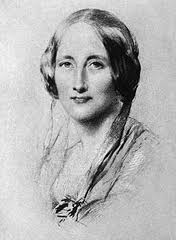
Gaskell feels so much like an English Edith Wharton but with a wider range. Among her many novels and short stories I'd only read North and South, and that too ages ago. I'd watched the Cranford mini-series. But these two mini-series were a revelation. It may even be blasphemy to say it, but I think I may even prefer her over Austen. Okay, okay, maybe that is going too far. But really, I suppose it's also because the subject matter is so intimate, I suppose in some way. I even heard someone describe Wives and Daughters as a Victorian 'soap opera'. And I suppose in some sense it is. But a soap opera with greater depth and sense of adventure you will not find.
Elizabeth Gaskell (Source: Here)


As for North and South, I suppose the character of John Thornton has always been one of fascination comparable perhaps only to Mr Darcy- but more tender and vulnerable I think. Richard Armitage brings a wonderful stern, yet vulnerable muted sexiness to the role. The man's acting is wonderful and I suppose I even have a slight crush on John Thornton as portrayed by Armitage. Watch it and I dare you to come away NOT feeling that little something. In any case, the heroine of the story , Margret Hale, is timeless, in her courage, willfulness and almost unnerving ability to take life on. She is beautifully portrayed by Daniela Denby-Ashe.

So,all in all, it's been a wonderful day. It also got me thinking about whether I'd ever be satisfied with my current world. I suppose there is a part of me longing for the kind of adventures portrayed in these stories- a longing to break down barriers and live more fully and love more fully...
I wonder what's in store...  
Source: Here

Wednesday, May 1, 2013

Mangoes and blooms

The hot weather continues here broken occasionally with cool breezes when it rains in Kerala or in the Western Ghats. We have our own thunder showers but these are far too few. The best thing though about this city at this time of year are the profusion of flowers. The jacarandas, the queen's wreath, the tabebuia are in full bloom and provide much needed visual relief.
The sky before a recent thunderstorm

A queen's wreath in full bloom
Badamis and avocados


And of course the heat also means the sweetest mangoes. I've been trying quite a few varieties this year. So far I've sampled the bangenapllis, the raspuris and this week , the badamis. The latter my research tells me are the local cousins of the famed Alphonsos. These I have found make the best smoothies with avocados.

I just finished reading an interesting crime thriller called Layover in Dubai by Dan Fesperman. I found it particularly interesting because it was set in Dubai, not a city one associates with crime thrillers. Fesperman has managed to capture some of the essence of the place. He's done a decent job of capturing the conflicts even if in broad strokes. A good read and I definitely recommend it.
Source:here


At the moment I'm also reading a book called Grave Secrets in Goa by Kathleen McCaul. It has started out well. But I find it exceedingly irritating that no one seems to have bothered to edit the book or proof read it. Among the many irritating mistakes are the usual 'Your' becomes 'you're' kinds and vice versa.  In any case, the mystery seems to be well-plotted. But it's still early days.


I'm continuing with the Laurent Gayer and Christophe Jaffrelot edited Muslims in Indian Cities. This is a much needed collection of empirical studies on the state of the community in India. Each chapter provides a snapshot of a community seemingly under siege. It is clear though that much more research needs to go into figuring out exactly what's going on. But this is definitely a good start.
Source: Here

Sunday, April 21, 2013

Books and other beautiful things...

So, my first post of the year is being written well into the strange new year. April is almost ending and the world is as uncertain as it has been at any time. Bombings, earthquakes, the deaths of thousands of innocents, economic uncertainties, all continue unabated. But there have been some changes in my attitude toward these. I wouldn't call it detachment but it comes close. Life must go on. And we must find beauty where we can I think. The world is what it is and the troubles are what they are. My engagement with it must be a considered one if I can be of any use at all. Knee jerk reactions are all very well, but they are just that.

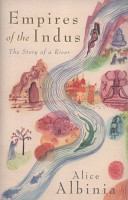
In the meantime, I have been reading some beautiful books. A couple deserve special mention. Empires of the Indus was one. Alice Albinia's breathtaking adventures following the Indus from the mouth to the source is a soulful, courageous journey that will captivate you from page one. Where this young woman found the physical courage to accomplish her journey is beyond me. The book is a record of the history of one of the
Source: Here
oldest rivers in the world. It is also a historical record of one of the most volatile regions of the world. Empires is essential reading for anyone wanting to understand this constantly changing corner of the world and also perhaps as a cautionary tale about what we are doing to the beautiful world around us.

The other book that I came to admittedly quite late is White Mughals by William Dalrymple. I have no idea why I waited so long to read this. But books must come to you when they will I believe. The book of course deals with those issues that don't ever seem to leave us and perhaps never will- assimilation, globalization, the
Source: Here
people who fall through the cracks , very often tragically. Dalrymple's true genius lies in the seemingly effortless telling of a complex tale mostly lost in the mists of time. The story of course broke my heart and I was left ever so devastated for a few days afterwards. But it was certainly well worth it.

Other than that, I've begun practicing yoga, after a long time. It's been good , if a bit achy. Summer's here and it's almost unbearably hot but the mangoes are good as are the gulmohars. Saturday morning was spent admiring these beautiful blooms. I'll leave you with a photograph of these beauties.Until next time...
Gulmohar Dreams

Thursday, December 20, 2012

The Menagerie of Bottles

So, the Girl with the Encyclopedia of Bottles,  has gone and done it again. She's taken the most ordinary little bottles that you and I would probably walk past with nary a second glance and gone and created the most surreal little menagerie.

In this age of recycling and upcycling and generally over- priced 'Eco-friendly'  stuff , it's becoming, sadly, increasingly rare finding imaginatively conceived truly interesting work. This isn't a spiel I promise you.

Animal Farm by Nishi Chauhan (Source: Here)
This menagerie isn't about mere upcycling by the way. Oh no. Flo, Gerry, Peeves, Ellie , Humf and Porky are so much more. Each is a carefully thought out, carefully designed piece that will light up your day - quite literally as it happens.

The best part though- for me- is the confluence of the old and the new. These fantastical creatures born of glass and wood bring together new notions with the timeless craftsmanship that we have long forgotten to appreciate- in this case the skills of the craftsmen at Channapatna in South India.

Animal Farm isn't about putting an old idea in a new bottle as it were. This little farm is about a new idea.It's also about rejuvenating an old art form. This project is about wedding two extraordinary ideas and creating unique, usable pieces that speak to you and me.

Read more about  'Animal Farm' here.


Sunday, December 9, 2012

Encounters 2

In December of 2005, I'd been in London about three months. This being my first time spending winter in a place that far north on the globe, the sudden onset of darkness by 4 in the afternoon was still a bit of a novelty and ever so slightly depressing. Christmas was definitely in the air. The weather was wet and oh so cold for my desert bred self.

One evening I was returning by tube from the last class of the term at SOAS. I got off the tube at Belsize Park where I was rooming and started walking up the street. I had gone barely a few meters out of the tube station when I saw an elderly lady wrapped up in a long coat and wool cap walking slowly and painfully up the street. The streets up in Belsize and Hampstead are rather steep.The ground was wet and she looked as if she might be in some pain. I'm not sure why, as I'm usually a bit reserved around strangers but I thought I'd stop and ask her if she needed  help. She immediately held my hand and asked me if she was walking in the right direction toward the Royal Free Hospital. As it happened she was and I was headed in the same direction. The residence I was rooming at was right next door to the Royal Free. And so it was that I offered to drop her off at the hospital.

It took us about 20 minutes to cover a distance that usually takes about 6 minutes and that was enough time for us to exchange stories and what a fascinating story she had. Her name it turns out was Dr. Jutta Singer. Yes, she made sure I knew she was a doctor. Anyway, she lived in Schonfeld Park in North London. She was Jewish and she used to be married to a doctor from Mauritius.Her husband was, she said, a Muslim man who had passed away about 20 years ago by then and she'd come back to London.  Her marriage had apparently not gone down too well with her community but now as a widow she'd been welcomed back. By the time she'd explained all this we'd arrived at the entrance to the Royal Free and we said our goodbyes. But not before she asked me if I'd like to help her sort out her papers and things at her home in Schonfeld Park. She apparently had too many of them and had a small army of students much like myself who occasionally helped her out. I almost immediately said why not. After all, this would give me a chance to learn a bit more about a community I'd long been curious about. Besides, Dr, Singer sounded like she had many more stories. And so began one of the strangest associations of my life.

Over the next four months, twice a week, I'd visit her in Schonfeld Park in the afternoons. Schonfeld Park , named for a rabbi who apparently ran an orphanage or some such ( I don't remember exactly now), was a housing estate in Stoke Newington in North London occupied entirely by Hassidic Jews. It was a world unto itself, as they say. Each time I visited it felt like I was stepping into another world. Dr. Singer's apartment closely resembled a storeroom of sorts. The little flat was overflowing with stacks of papers and books and smelled vaguely like something was boiling on the stove all the time.Most of her needs in terms of food was catered to by her young neighbours. I never did find out what these neighbours did for a living. The young women were all mothers to broods of seemingly extremely well-behaved young children. The men, I'm not sure what the men did really. They all seemed rather scholarly. I really should have been a bit more curious about this I guess. In any case, my days with Dr. Singer usually involved arranging her papers for her, arranging her various Sabbath invites and mostly just listening to her stories. These included stories about her childhood in Austria. It sounded rather idyllic until of course the horrors visited on that country by Hitler. Dr. Singer was shipped off to England before that along with her siblings. The rest of her family sadly perished in one of the labour camps.

Dr. Singer on the other hand was brought up by her relatives in London. She went on to study medicine and eventually specialized in women's health. Then sometime in the 1960's or so, the British government deputed her to go out to Mauritius and set up a family planning clinic. And this is where she met the handsome Dr. Ebrahim. There followed the usual drama that surrounds inter-faith marriages. In any case, they managed to get married and became parents to three bright boys  who all seem to have grown up into high profile careers and good marriages it would seem.

Sadly though at the end of four months, academics and my own life got in the way and I was no longer able to spare the time I'd need to travel up to her. I've always wondered what happened to her. I misplaced her number and wasn't able to get in touch with her before leaving London. I do hope that her sons came to see her. She always seemed rather lonely and they never seemed to be able to make the time. One morning, shortly before I left her  she told me that she wanted to give me a badge that said ' Angel Friend'. It turns out that the lady had a whole network of young people like me that she'd met in circumstances very like the one that we met under and she called them her Angel Friend Network. She told me that they seem to come into her life when she most needed them and they seemed to leave when their role in her life was up. But she was deeply grateful for whatever this plan was that the universe had that was sending her these angels. I suppose that's as good as an explanation as any , don't you think?